
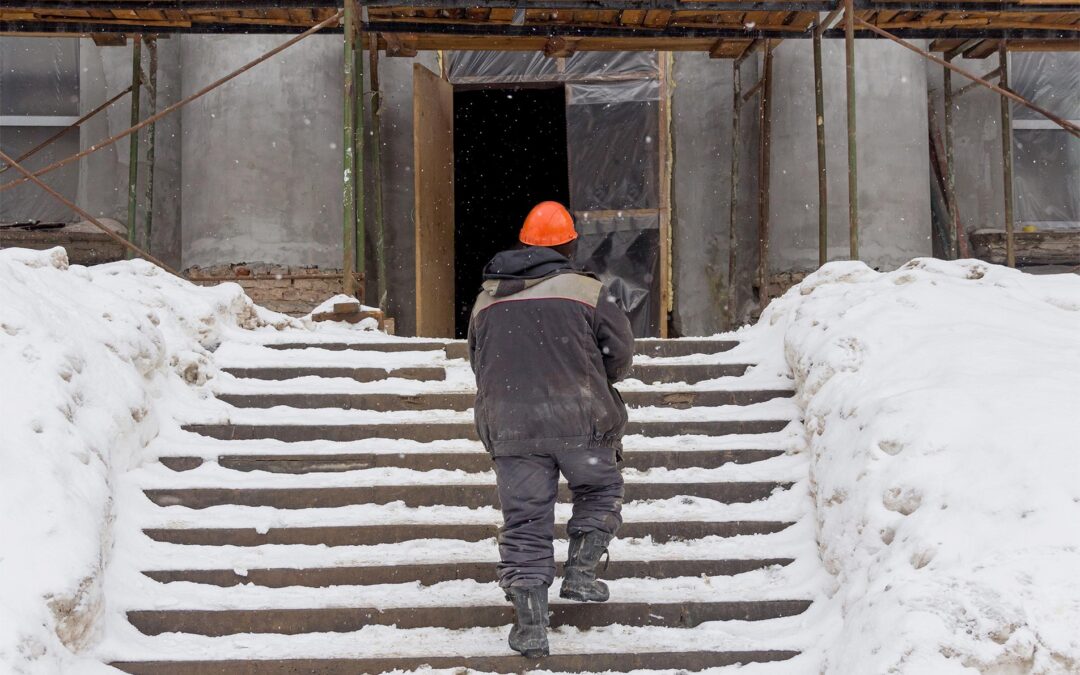
At Patriot Insurance Company, we understand the challenges New England winters can bring. From icy walkways and freezing temperatures to reduced visibility and equipment challenges, contractors face unique risks during the colder months.
However, while conditions can be unpredictable, preparation doesn’t have to be. Taking a proactive approach to jobsite safety can help reduce hazards, prevent costly setbacks, and protect your employees, equipment, and business throughout the season.
With that, here are some essential winter safety tips for contractors to keep in mind.
How to create safer jobsites and surfaces
Winter weather can turn an ordinary workday into a hazardous one. Take the time to prepare and inspect your jobsite, so you can prevent injuries before they happen.
- Clear ice and snow: Before the first shift begins, shovel, plow, and apply salt or sand to all walkways, entrances, and active work zones. Reinspect these areas throughout the day, especially after snowfall, freezing rain, or temperature changes.
- Control overhead hazards: Check rooflines, eaves, scaffolding, temporary structures, and elevated equipment for icicles or accumulated snow and ice that could fall without warning. Remove any hazards using properly trained personnel and equipment or restrict access until the area has been cleared.
- Improve footing: Keep walking and working surfaces clear of snow and ice. Where additional traction is needed, use properly secured, slip-resistant mats or other materials specifically designed for the surface and working conditions. Inspect these areas regularly to ensure they remain safe.
How to equip workers for cold weather conditions
The right clothing does more than keep workers comfortable. It helps protect against cold stress, improves visibility, and supports safe jobsite performance throughout the day.
- Dress in layers: Encourage employees to wear a moisture-wicking base layer, an insulating mid-layer, such as fleece or wool, and a windproof, waterproof outer shell. Hats that cover the ears and face coverings can provide extra protection, too.
- Protect hands and feet: Provide insulated, waterproof boots with reliable traction, along with hard hat liners and grip gloves that offer warmth without limiting dexterity.
- Stay visible: Make sure high-visibility outerwear and safety vests can be seen, even when workers add or remove layers throughout the day.
How to identify and prevent cold stress
Winter weather can impact workers gradually, making it important to recognize concerns early and respond quickly.
- Know the warning signs: Train your team to recognize symptoms of hypothermia, frostbite, and trench foot, including uncontrollable shivering, numbness, confusion, or unusual fatigue.
- Provide warm recovery areas: Make heated break trailers or other properly ventilated, designated warming areas available, so workers can take breaks and change out of damp clothing. Ensure heating equipment is installed and operated safely, and provide carbon monoxide detection where appropriate.
- Encourage proper hydration: Remind workers to drink water regularly and choose warm, non-caffeinated beverages when possible.
- Plan work around conditions: Try to schedule jobs during the warmest part of the day and rotate workers to limit exposure to extreme cold.
How to keep equipment and vehicles winter-ready
Cold temperatures can take a toll on equipment, vehicles, and tools. A little preparation can help reduce downtime and keep operations running smoothly.
- Allow equipment to warm up: Give heavy machinery and fleet vehicles a few minutes to idle, so oil and other fluids can circulate properly.
- Use winter-ready fluids and systems: Switch to winter-grade oils and inspect machinery for frozen fuel lines, weak batteries, or moisture buildup in compressed air systems before beginning daily operations.
- Stock emergency supplies: Keep trucks and fleet vehicles equipped with winter emergency kits that include ice scrapers, flashlights, small shovels, extra blankets, traction aids, jumper cables, tow straps, and emergency flares.
How to stay safe all year long
Following these winter safety tips for contractors can help reduce risks, protect employees, and keep projects on track. But even with the best planning, accidents can happen. That’s why Patriot Insurance Company partners with Medcor to provide a free injury triage service for all workers’ compensation policyholders.
Available 24 hours a day, seven days a week, the service connects employees with trained healthcare professionals who can provide immediate guidance for non-life-threatening workplace injuries. Learn more or talk to your local, independent insurance agent today.
This content was developed for general informational purposes only. While we strive to keep the information relevant and up to date, we make no guarantees or warranties regarding the completeness, accuracy, or reliability of the information, products, services, or graphics contained within the blog. The blog content is not intended to serve as professional or expert advice for your insurance needs. Contact your local, independent insurance agent for coverage advice and policy services.
